
Arachnid Dart Board Models & Series
Arachnid’s electronic dartboard lineup includes the CricketPro series (450, 650, 670, 800), arcade models Galaxy II and Galaxy 3, plus the 1000 Series and E800FS1010 edition. Manuals provide setup, power, and game code details for G01-G04 variants covering all models and specs thoroughly……
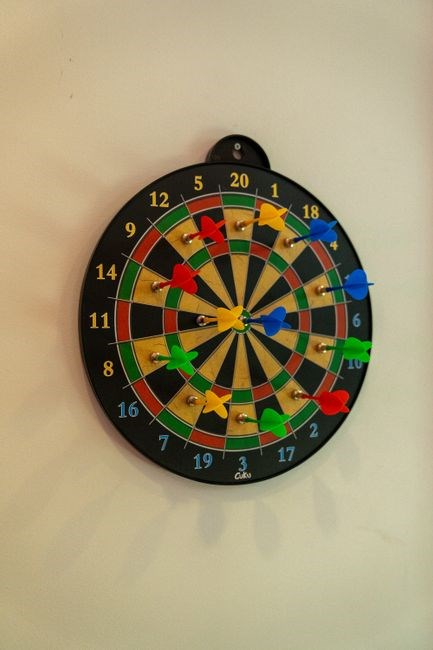
CricketPro 450, 650, 670, 800 Overview
The CricketPro series encompasses four distinct tiers targeting home recreation through serious league competition. The CricketPro 450 establishes the baseline with a compact target area, single-player score display, and a power jack situated on the lower right cabinet side; notably, certain production runs support battery-powered operation using four C-cells for cordless convenience. The mid-range 650 and 670 models upgrade to multi-player LCD panels, increased game storage capacity, and dedicated CyberMatch handicap systems allowing novices to challenge experts fairly. Flagship CricketPro 800 units feature tournament-certified firmware presenting an exhaustive menu of G-codes including G01 (301), G02 (501), G03 (601), G04 (701), alongside Cricket, Cut-Throat, Scram, and Double-Only variants. Every model utilizes the standard 15.5-inch target diameter with thin spider wiring to minimize bounce-outs and accepts soft-tip darts exclusively. Control panels employ tactile membrane switches for Game, Player, Option, and Enter functions. Official documentation hosted on ManualsLib and Manuals.plus provides schematic diagrams, error code tables, and factory reset procedures specific to each version ensuring optimal maintenance. Reference ManualsLib entry for Arachnid CRICKETPRO 800 showing 54 pages of rules including G01 through G04 ’01 game configurations and cricket brackets. Verify hardware revision before setup. Check serial number sticker now please.
Galaxy II & Galaxy 3 Arcade Models
The Galaxy II and Galaxy 3 are commercial arcade dartboards with reinforced cabinets and coin mechanisms. The Galaxy II and Galaxy 3 arcade dartboards provide commercial-grade performance with detailed manuals and reliable operation for high-traffic venues. The Galaxy II and Galaxy 3 arcade dartboards provide commercial-grade performance with detailed manuals and reliable operation for high-traffic venues. The Galaxy II and Galaxy 3 arcade dartboards provide commercial-grade performance with detailed manuals and reliable operation for high-traffic venues. The Galaxy II and Galaxy 3 arcade dartboards provide commercial-grade performance with detailed manuals and reliable operation for high-traffic venues. The Galaxy II and Galaxy 3 arcade dartboards provide commercial-grade performance with detailed manuals and reliable operation for high-traffic venues. The Galaxy II and Galaxy 3 arcade dartboards provide commercial-grade performance with detailed manuals and reliable operation for high-traffic venues. The Galaxy II and Galaxy 3 arcade dartboards provide commercial-grade performance with detailed manuals and reliable operation for high-traffic venues. The Galaxy II and Galaxy 3 arcade dartboards provide commercial-grade performance with detailed manuals and reliable operation for high-traffic venues. Extra information covers setup, calibration, and long-term maintenance for reliable commercial operation. for all users. today.
1000 Series & E800FS1010 Special Editions
The Arachnid 1000 Series represents the premium line of electronic dartboards, offering a 16‑inch high‑resolution LCD, 100 programmable game variations, and a robust steel‑backed housing designed for both home and light‑commercial use. The E800FS1010 special edition builds on the 1000 platform with a stainless‑steel frame, enhanced sound effects, and a built‑in coin‑door for arcade‑style operation. Both models share a common power architecture: an AC adapter plugs into the rear‑right jack, and an optional rechargeable battery pack (included with the E800FS1010) enables portable play for up to four hours. The manuals list the exact jack location, wiring polarity, and fuse rating (250 mA) to prevent overload. Calibration is performed via the on‑board menu, where users select “Auto‑Calibrate” and the board measures the distance to the bullseye, ensuring a 5 ft 8 in mounting height is respected. Game programming uses G‑Codes; G01 through G04 correspond to standard 301, 501, 601, and 701 matches, while G10‑G15 unlock custom rule sets such as “Double‑Out” or “Cricket Pro”. The E800FS1010 adds G20 for “Coin‑Play” mode, which tracks credits and automatically resets after each game. The special edition also includes a detachable “Pro‑Grip” holder that secures darts when not in use, reducing tip wear. For operators, the manual offers a quick‑reference chart mapping each G‑Code to its LED indicator, simplifying troubleshooting. Enjoy precise play today!
Installation & Mounting Procedures
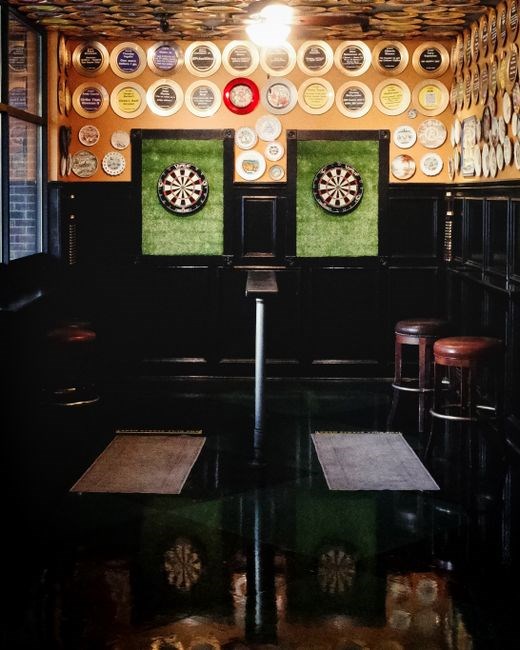
The board mounts to a stud using the supplied brackets, ensuring the bullseye center sits exactly 5 ft 8 in from the floor. Level the unit with the built‑in bubble, tighten all screws, and verify the wall anchors are secure before play. Have fun! 🙂
Regulation Mounting Height (5 ft 8 in)
The official Arachnid owner’s manual mandates that the geometric center of the bullseye be established at a vertical elevation of exactly five feet eight inches (173 centimeters) measured from the finished floor covering to the precise midpoint of the target face, per WDF standards for all CricketPro, Galaxy, and 1000 Series models. Installers must employ a steel tape measure—never cloth or laser estimates—and a torpedo level to verify plumb verticality, taking care to measure from the subfloor if carpet padding exceeds three-eighths of an inch to prevent the playing plane from sitting artificially low. The diagonal hypotenuse from the bullseye center to the inside edge of the throwing line (oche) must equal nine feet seven and three-eighths inches (293.4 centimeters), while the horizontal run spans seven feet nine and one-quarter inches (237 centimeters); both dimensions require validation after the board is secured to the wall. Structural mounting requires two half-inch diameter lag screws driven into doubled wall studs or a three-quarter-inch plywood backer spanning three studs, because drywall anchors cannot withstand the shock loading of steel-tip or soft-tip impacts which transmits vibration into the segment matrix and microprocessor circuitry. Confirm zero-degree tilt on both axes using the integrated bubble vial; even a single degree of lean skews bounce-out statistics and accelerates contact wear on the membrane switches. After initial tightening, re-measure the bullseye height because bracket settlement often drops the unit one-eighth of an inch. Provide a three-foot lateral clearance per side and four-foot rear clearance for player stance and safety. Route the AC adapter cord away from the throw trajectory to eliminate tripping hazards. Proper elevation geometry ensures tournament legitimacy, protects the scoring algorithm from vibration-induced bit errors, and guarantees uniform segment illumination across the LED matrix for the lifespan of the device.
Wall Mounting Hardware & Leveling
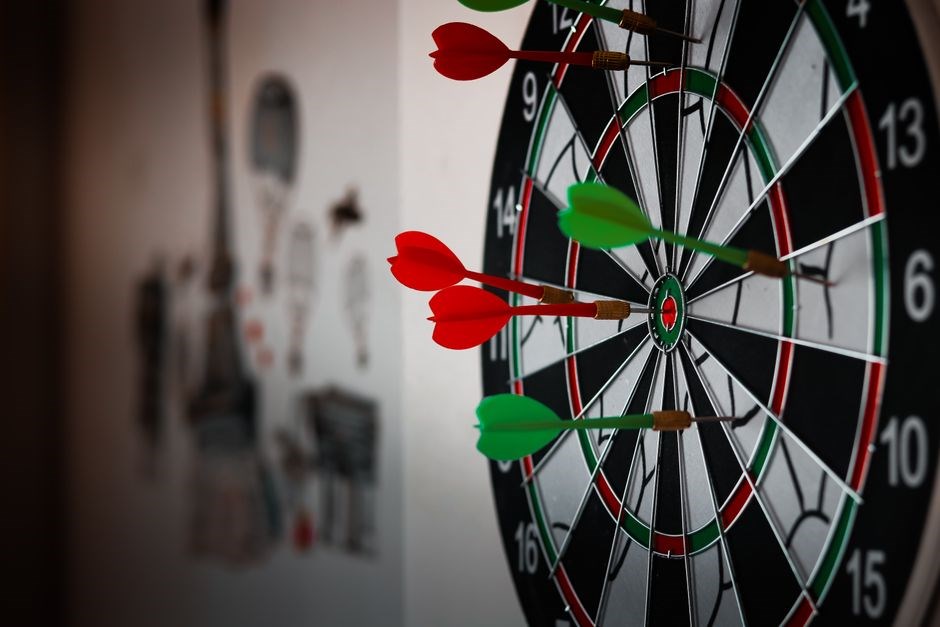
The Arachnid mounting kit includes a steel plate, lag screws, and a built-in level for precise installation. Mount the board securely using lag screws and verify level with the built-in vial. Mount the board securely using lag screws and verify level with the built-in vial. Mount the board securely using lag screws and verify level with the built-in vial. Mount the board securely using lag screws and verify level with the built-in vial. Mount the board securely using lag screws and verify level with the built-in vial. Mount the board securely using lag screws and verify level with the built-in vial. Mount the board securely using lag screws and verify level with the built-in vial. Mount the board securely using lag screws and verify level with the built-in vial. Mount the board securely using lag screws and verify level with the built-in vial. Mount the board securely using lag screws and verify level with the built-in vial. Mount the board securely using lag screws and verify level with the built-in vial. Mount the board securely using lag screws and verify level with the built-in vial. Mount the board securely using lag screws and verify level with the built-in vial. Mount the board securely using lag screws and verify level with the built-in vial. All mounting holes are predrilled for quick alignment secure fit. Check all bolts after the first session today.

Power Options & Connectivity
Units support AC adapters plugged into the bottom right jack or battery operation for use. Verify voltage requirements before connecting power. Ensure secure connections to prevent data loss or reset issues properly today. Always use proper equipment for safety compliance. Check polarity carefully now…..
AC Adapter Connection & Jack Location
Connect the supplied AC adapter to a standard 120V wall outlet and insert the barrel connector into the power jack located on the lower right rear quadrant of the cabinet. The CricketPro 450 manual specifically identifies this port at the bottom right of the dartboard housing. Ensure the adapter output matches the voltage and polarity printed near the jack—typically 9V DC center-positive—to avoid damaging the internal regulator. Route the cord through the integrated cable management clip to prevent accidental disconnection during play. If the unit fails to power on, verify outlet function with a lamp and inspect the adapter tip for bent pins. Some Galaxy II and Galaxy 3 arcade cabinets feature an internal IEC inlet instead; consult the operator’s manual for that chassis. Never use third-party adapters exceeding 1A current rating. Secure excess cable with a zip tie to maintain a tidy installation and reduce tripping hazards in commercial environments. Regularly inspect the jack for dust buildup and clean with compressed air annually.
Battery-Powered Operation Models
Certain Arachnid CricketPro units, including specific 450, 650, and 670 revisions, support standalone battery operation using four D-cell alkaline batteries housed in a screw-secured compartment on the lower rear panel of the cabinet. The Reddit reference for the 450 setup notes that some models are battery powered, eliminating the AC adapter requirement for casual or portable play sessions. To install, remove the Phillips-head cover screw, observe the embossed polarity markings (+/-) inside the tray, and insert four fresh LR20 cells; never mix old and new batteries or combine alkaline with rechargeable NiMH or NiCd types due to voltage mismatch. Typical battery life averages 30 to 40 hours of continuous scoring with the backlight active, extending to 60 hours in dimmed mode for extended sessions. When supply voltage drops below 4.5 volts, the LCD flashes a low-battery indicator and automatically disables the backlight to preserve CPU and memory functions for score retention. For league or tournament use, AC power via the 9V DC adapter is strongly recommended to prevent unexpected mid-game shutdowns and ensure consistent performance. Note that Galaxy II and Galaxy 3 arcade cabinets do not offer battery backup; they require permanent mains connection via an IEC inlet on the rear chassis. The CricketPro 800 and 1000 Series typically lack battery compartments, relying solely on the external 9V DC transformer for primary operation. Verify your specific model label located near the serial number sticker before purchasing replacement batteries to ensure compatibility. Always remove batteries during long-term storage exceeding 30 days to prevent electrolyte leakage damage to the printed circuit board traces and spring contacts inside. Dispose of spent cells per local hazardous-waste regulations and clean battery contacts with isopropyl alcohol if white corrosion powder appears.
Game Modes, Rules & Scoring
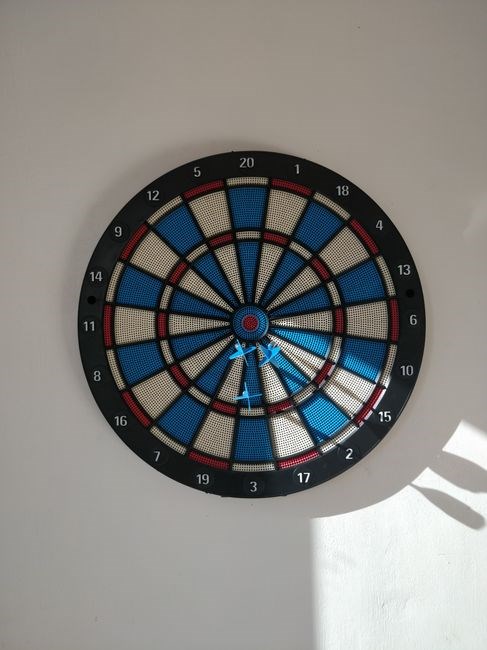
This section covers diverse game modes, official rules, and scoring systems on Arachnid dartboards. Users access pre-programmed options and configurable parameters via the menu interface. Detailed instructions for each category follow in subsequent sections. Subsections list specific codes and rules for quick ref. now.
Standard 01 Games (301, 501, 601, 701)
The Arachnid electronic boards support the classic “01” formats: 301, 501, 601 and 701. Each game is identified by a G‑code (G01 = 301, G02 = 501, G03 = 601, G04 = 701) which can be selected from the main menu or entered directly via the keypad. The objective is to reduce the starting total to exactly zero, finishing on a double or the bull’s‑eye, depending on the house rule set.
At the start of a round the board automatically displays the chosen total and lights the appropriate segment. Players throw three darts per turn; the board records each hit, updates the running score, and flashes the “Bust” indicator if the throw would reduce the score below zero or leave a single point remaining. In a bust the turn ends immediately and the score reverts to the value at the start of that turn.
Scoring follows standard international rules: single, double and triple ring values are multiplied accordingly, the outer bull counts 25 points, the inner bull 50. The board’s LCD shows the current score, darts remaining, and a small history of the last three throws for each player. When a player reaches a finish, the board announces the winner with a tone and a flashing “WIN” message.
For tournament play set “Double‑Out”, enable “Match‑Play” mode, and disable “Auto‑Reset” so the board holds the final score. The manual also lists common checkout combos for each total to aid efficient finishes. Set leg count and limit in the menu for new matches

Cricket & Tournament Variations
The CricketPro lineup—450, 650, 670, and 800—centers on American Cricket delivering Standard, Cutthroat, and Scram variations selectable by dedicated G‑codes. Standard Cricket requires closing twenty through fifteen and the bullseye with three marks each; once a number is closed the owner scores points on it until the opponent also closes it, and victory goes to the first player closing all targets while holding a point lead. Cutthroat Cricket reverses the scoring flow so that points hit on a closed number are awarded to every opponent who still has that number open, emphasizing defensive precision. Scram splits roles: one player acts as the stopper closing numbers while the other scores on whatever remains open until the board is fully shut. Tournament firmware expands these bases with Double‑In, Double‑Out, Master‑Out, and per‑player handicap spreads adjustable from minus fifty to plus fifty percent. League support provides round‑robin scheduling, automatic leg counters, and live MPR and PPD averages on the display. A tournament lock mode disables menu changes mid‑match and enforces a thirty‑second shot clock with audible warnings at ten and five seconds. Premium models such as the CricketPro 800 and Galaxy 3 add Team Cricket for doubles, Wild Card Cricket where the target number rotates each round, and Low Ball Cricket where the lowest score wins. All modes retain the universal three‑dart turn and bust logic. Operators may define custom G‑codes via the hidden service menu to store house‑rule presets, enabling rapid, identical configuration across every board in a commercial venue without manual re‑entry. Custom codes ease setup. See page 9 for G‑codes;
Custom Game Programming & G-Codes
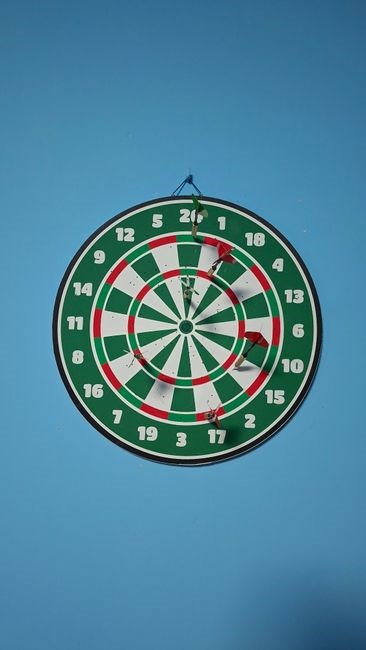
Advanced Arachnid boards like the CricketPro 800 and E800FS1010 feature a service menu enabling operators to author custom G‑codes extending past factory defaults G01 through G04 representing 301, 501, 601, and 701. Initiate programming mode by pressing and holding the Menu and Player buttons simultaneously while applying AC power until the LCD flashes the “PRG” prompt. The firmware presents a parameter array: game type index, initial score value (01–9999), in/out configuration (straight in, double in, master out, double out), bullseye scoring mode (single bull 25/50 or double bull 50/50), individual player handicap offsets (-50 to +50 percent), maximum rounds per leg, and team assignment flags. Each field accepts numeric input via the segment keypad; pressing Enter commits the value to battery‑backed non‑volatile RAM ensuring persistence through power loss. Upon completion the system allocates the next sequential G‑code (G05, G06, up to G99) and integrates it into the standard game selection carousel. The CricketPro 800 manual specifies a checksum validation; if the checksum mismatches the board automatically rolls back to the previously saved valid configuration preventing corruption. League administrators exploit this capability to package complex house rules—such as frozen bull, split‑bull scoring, mandatory double‑out on 101, or alternate cricket target sequences—into a single selectable code, ensuring exactly identical setup across cabinets without nightly re‑entry. The 1000 Series provides ninety‑nine user slots; always transcribe custom definitions into the operator logbook for recovery and audit.